
US President Donald Trump, Chinese President Xi Jinping, and Russian President Vladimir Putin adopted a joint 'Declaration towards Peace' following their trilateral summit in Shenzhen, committing to dialogue on reducing nuclear risks, ensuring stable energy flows, and preventing the abuse of jurisdiction by the International Criminal Court.

As the Winter Olympics open in Beijing today, exile Tibetans staged a demonstration in Dharamsala on Thursday, February 3, 2022, to highlight human rights abuses in Xi Jinping's China.

Chinese President Xi Jinping concluded his three-day visit to the US, stating that his discussions with President Donald Trump had injected "new substance" into the China-US relationship. Both leaders expressed optimism for future cooperation, with agreements reached on certain trade goods and discussions held on AI capabilities.

Prime Minister Narendra Modi welcomed BRICS leaders, including Russian President Vladimir Putin and Chinese President Xi Jinping, at the 18th BRICS summit in Bharat Mandapam. The leaders were photographed against the backdrop of Tamil Nadu's iconic Ramanathaswamy temple, a significant Hindu pilgrimage site. Modi explained the temple's importance to President Xi, highlighting its unique status as a Char Dham and Jyotirlinga shrine, and its historical and religious significance linked to Lord Ram.

Chinese President Xi Jinping is in New Delhi for the 18th BRICS Summit, where he is scheduled to hold bilateral talks with Prime Minister Narendra Modi. This visit, his first to India in nearly seven years, comes amidst efforts to normalise India-China relations following the 2020 Eastern Ladakh standoff and is expected to have significant implications for bilateral ties and BRICS cooperation.

The 18th BRICS Summit got underway in New Delhi with leaders of partner countries gathering in the capital to discuss the changing global economic and geopolitical landscape.

Xi Jinping, general secretary of the Chinese Communist party, at the the closing session of the Chinese People's Political Consultative Conference at the Great Hall of the People in Beijing, Thursday, March 10, 2022.

China emphasises proper handling of differences and a long-term perspective for bilateral ties ahead of President Xi Jinping's visit to India for the BRICS summit and talks with Prime Minister Narendra Modi. The visit aims to stabilise relations following the 2020 Ladakh standoff and strengthen BRICS cooperation.
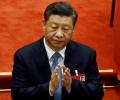
People across the nation have been carrying out protests demanding the resignation of Xi Jinping over his strict COVID-19 measures.

Prime Minister Narendra Modi conveyed to Chinese President Xi Jinping that peace and tranquillity along the frontier remains an "essential" basis for the development of India-China relations, even as the two leaders welcomed "steady progress" in bilateral ties during their talks on the sidelines of the BRICS summit.

Xi brought in asymmetrical power play by stating that India should have 'strategic cognition' and 'strategic judgement made on the basis of the stage of development the two countries are at'. This is a very nuanced way of asserting China's coercive diplomatic posture and reflects Beijing's penchant to unleash border instability at will, restrict rare earth metal exports, exert pressure on India at global and regional orders, asserts China expert Srikanth Kondapalli.
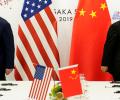
Top US and Chinese officials, including Vice Premier He Lifeng and Treasury Secretary Scott Bessent, held "candid, in-depth and constructive" talks in New York on economic and trade issues, with a specific focus on artificial intelligence. These discussions precede Chinese President Xi Jinping's anticipated visit to Washington and occur amidst new US sanctions targeting countries purchasing Russian oil and gas, and the US unveiling an "AI Force."

Chinese President Xi Jinping's upcoming visit to India for the BRICS summit is a pivotal diplomatic event poised to significantly impact bilateral ties and global cooperation amidst ongoing international instability.

Chinese President Xi Jinping addressed the BRICS summit, urging the bloc to play a significant role in achieving peace and tranquillity in West Asia and the Gulf region. He highlighted BRICS' growth over two decades, its efforts in tackling global challenges, and its steadfastness in safeguarding the interests of the Global South. Xi called for opposing the Cold War mentality, strengthening multilateralism, and promoting cooperation in emerging domains like AI, as China prepares to chair the next summit.

'It doesn't look as if any sensible, worldly wise, person is in charge in China.' 'If at all anybody is in charge, it can only be a bunch of bumpkins of whom Xi has become a puppet,' observes B S Raghavan, the veteran civil servant.

During the 18th BRICS Summit in New Delhi, Chinese President Xi Jinping and Prime Minister Narendra Modi held a bilateral meeting, outlining a four-point approach for the steady and long-term development of China-India relations. The leaders stressed strategic understanding, win-win cooperation, mutual respect, and inclusive multilateral engagement, reaffirming their commitment to resolving the boundary question and addressing economic concerns. They also discussed global challenges and strengthening people-to-people ties.

'Is Xi's China stable?'
'No one can say whether the regime will fall all at once or if its leaders are devising a new solid and competitive -- anything but democratic -- model.' A fascinating excerpt from Francois Bougon's Inside The Mind of Xi Jinping.

Instead, Chinese Premier and Xi's confidant Li Qiang will take part in the summit to be held on July 6-7 in which Prime Minister Narendra Modi was expected to take part.

A participant holds the Tiranga during Tawang's first-ever motorcycle expedition from Holy Tree to the Holy Waterfalls organised by the Indian Army in Tawang, August 23, 2022.

Chinese Foreign Minister Wang Yi stated that President Xi Jinping and Prime Minister Narendra Modi reached a crucial consensus during the BRICS summit, agreeing that China and India should be partners, not rivals. The leaders pledged to maintain peace and tranquility in border areas, deepen cooperation, and support each other in multilateral forums, aiming to strengthen the Global South and promote a multipolar world order.

'Does it mean that we are witnessing the end of an era?' 'Probably not, but the post-Trump trade war has certainly brought a lot of instability in China,' notes Claude Arpi.

'Xi is conveying that China is a pre-eminent power, and India should modulate its actions or approaches accordingly.'

China's communist party has expelled two senior military officials, including General Zhang Youxia, the highest-ranking People's Liberation Army officer, for serious discipline and law violations.

Why is China's supreme leader promoting Han Chauvinism so aggressively, asks Claude Arpi.

US President Donald Trump concluded his Beijing summit with Chinese President Xi Jinping, describing it as 'incredible' and highlighting 'fantastic trade deals' and a 'very strong' relationship between the two leaders.

Claude Arpi profiles Xi Jinping, the man destined to lead China soon.

The Ministry of External Affairs (MEA) has issued a warning against 'malicious' and 'misleading' social media posts concerning the health of world leaders, specifically Chinese President Xi Jinping and South African President Cyril Ramaphosa, who attended the recent BRICS Summit in New Delhi. The warning comes amidst unverified claims about Xi's health and an official statement from Ramaphosa's office confirming his withdrawal from public engagements due to ill health.

Prime Minister Narendra Modi cautioned against the 'weaponisation' of technology and critical minerals at the BRICS summit, advocating for cooperation to foster shared prosperity. Concurrently, Chinese President Xi Jinping announced plans for an open-source AI ecosystem for BRICS nations, positioning Beijing as a key technology partner amid global AI competition.

Russian President Vladimir Putin and Chinese President Xi Jinping have reaffirmed their commitment to dismantling global hegemonism and building a 'multipolar world' during high-level talks in Beijing.

'The title of 'core' of the leadership gives Xi Jinping greater political authority at a time when China is beset by various problems as well as a slowdown in economic growth,' points out former RA&W officer Jayadeva Ranade.

Chinese President Xi Jinping warned that the Taiwan issue could lead to clashes and even conflicts between China and the United States if not handled properly. He emphasised the importance of safeguarding peace and stability across the Taiwan Strait for stable relations.

National Security Advisor Ajit Doval engaged in Special Representatives talks with Chinese Foreign Minister Wang Yi in Beijing, focusing on the India-China boundary question and enhancing bilateral relations. These crucial discussions precede Chinese President Xi Jinping's anticipated visit to New Delhi for the BRICS summit, aiming to address persistent border differences and stabilise ties strained by past conflicts like the Galwan Valley clash.

On his arrival, Xi will be welcomed by traditional peformances including 'tappu' folk drum art display at the airport by about 500 artistes.

During the meeting, President Xi addressed the ministers and discussed the bilateral issues among the countries and the issues affecting the South-Asian regions.
National security advisor Ajit Doval arrived in Beijing on Monday for a two-day visit to take part in the Special Representatives talks on the India-China boundary question with his Chinese counterpart and Foreign Minister Wang Yi.

Chinese President Xi Jinping received a guard of honour on Thursday in the forecourt of Rashtrapati Bhawan on Thursday.

'Eastern Ladakh set the relationship back by about 10 steps. So far, especially since Galwan, we may have taken just 4 steps forward.'

French hospitality at its best at a state dinner in honour of China's President Xi Jinping and his wife Peng Liyuan at Elysee Palace, Paris.

The Chinese Communist Party's all important 19th Party Congress is just months away, and President Xi Jinping finds himself confronting unlikely challenges to his pre-eminent position, says former RA&W officer and China watcher Jayadeva Ranade.

Chinese Vice President Xi Jinping, who will takeover as president next year, seems to have realised that the past policy of repression can't solve the long-pending Tibetan issue, says Claude Arpi.
